Acoustic Direction
Decide whether the product should emphasize music, calls, meetings, sports use, low-price retail, or a balanced daily listening profile.
 Alibaba Verification
US Buyer Guide
A custom earbuds project needs clear decisions before mass production: product definition, acoustic and battery expectations, Wireless behavior, FCC readiness, packaging, sample approval, and inspection rules.
Product Definition
US consumer electronics brands often begin with a target retail price, competitor reference, or product image. Those are useful starting points, but they are not enough for factory production. Before sampling, the buyer should define the use case, sales channel, target user, expected quality level, custom appearance, packaging direction, and launch timeline.
A clear product definition helps the factory separate fixed requirements from flexible choices. For example, the buyer may need a specific case shape, logo position, gift-box structure, microphone requirement, or battery target, while color, accessories, or package inserts may still be open for factory recommendation.
iSoud's TWS earbuds OEM/ODM support is built for brand teams that need this requirement review before committing to a custom earbuds order.
Acoustic & Battery Expectations
Decide whether the product should emphasize music, calls, meetings, sports use, low-price retail, or a balanced daily listening profile.
Clarify whether call quality, microphone pickup, wind noise, office calls, or video-meeting use should guide sample evaluation.
Define listening time target, charging-case expectation, port preference, charging behavior, and any channel-specific claims that must be supported.
Review in-ear, semi-in-ear, open-ear, clip-on, or AI audio form factors according to the user scenario and brand positioning.
Wireless & Compliance Basics
For Wireless earbuds sold into the US market, production planning should consider the final product configuration, electronics, wireless behavior, labeling, user manual, packaging text, and shipment carton information. FCC readiness should be discussed early because late changes can affect timing and packaging decisions.
Buyers should avoid assuming that a generic product certificate covers every custom version. Logo, case, battery, electronics, accessory, packaging, or supplier changes can require review under the buyer's target sales channel. iSoud can help prepare the product design, material direction, sample route, and production consistency needed for the relevant buyer-specific path when applicable.
If the project includes AI translator earbuds or app-connected smart audio, review the AI translator earbuds OEM/ODM page because firmware, APP, microphone, and user-scenario decisions should be aligned before production.
Packaging & Retail Readiness
Brand presentation: confirm logo placement on earbuds, charging case, retail box, manual, and carton labels.
Sales channel: decide whether the package is built for ecommerce, store shelves, bundles, promotional gifts, or distributor resale.
Content accuracy: freeze product name, feature claims, barcode, warnings, manual language, accessory list, and warranty insert before production.
Shipping practicality: check master carton layout, carton marks, package protection, and mixed-SKU handling for the buyer's logistics path.
Sample Approval Workflow
A sample can look acceptable in a short review and still create problems in production. US buyers should approve custom earbuds with a checklist that covers appearance, color, logo, sound, microphone, pairing, charging, button or touch controls, battery behavior, accessory set, retail packaging, manual, and carton marks.
Each issue should be classified before the next round: must fix, acceptable variance, buyer decision, or production confirmation. This creates a shared standard between the buyer, sales contact, engineering team, quality team, and production line.
Production & Inspection
Freeze model, color, logo, package artwork, manual, accessory list, carton mark, and inspection criteria.
Review key materials and components before assembly so avoidable defects do not move downstream.
Use production checkpoints for assembly, function, charging, appearance, package accuracy, and line consistency.
Confirm finished-goods checks, package verification, carton status, and shipment readiness before dispatch.
Start With iSoud
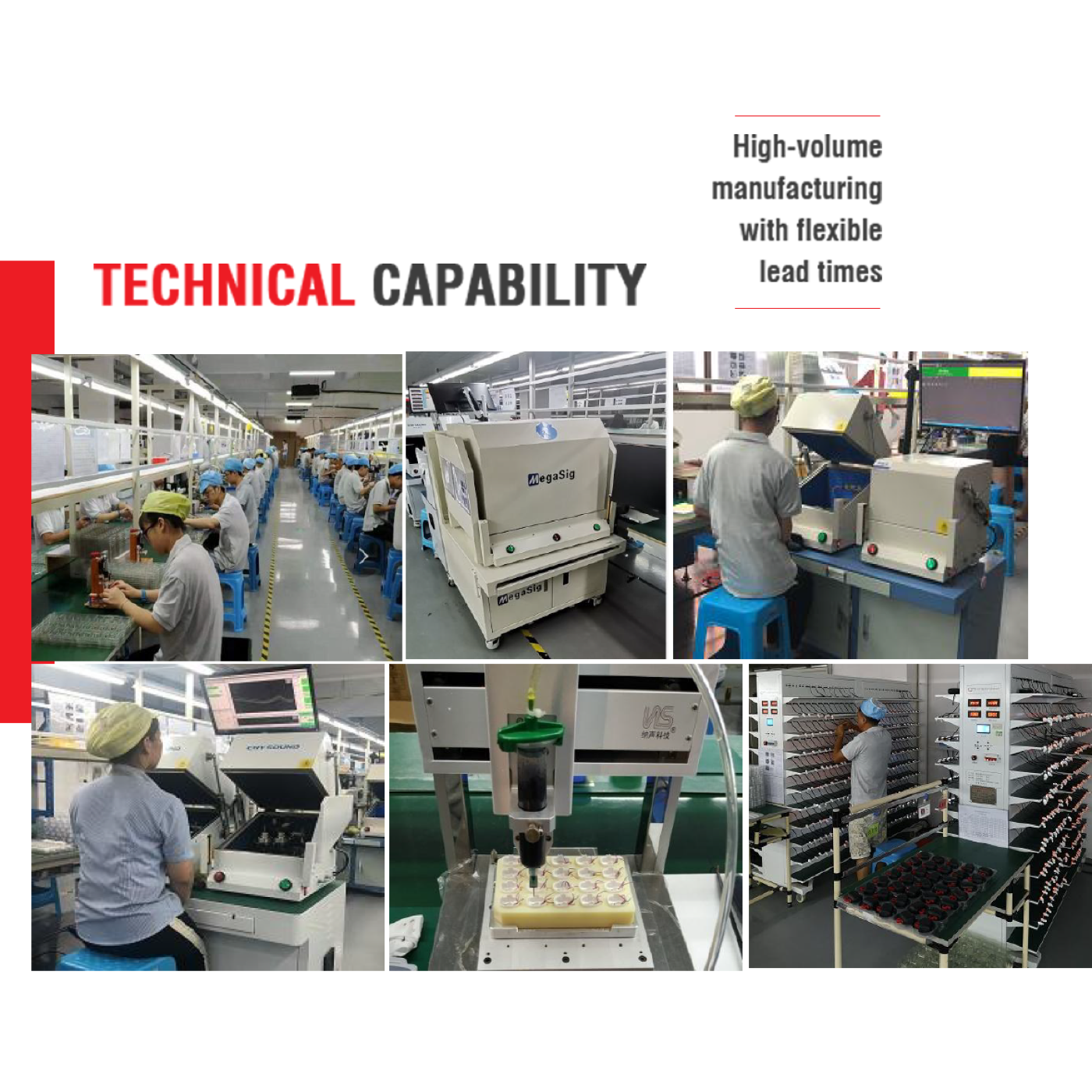
iSoud is the brand of Dongguan Yuanshengpai Electronic Technology Co., Ltd., a Dongguan-based OEM/ODM manufacturer founded in 2015. The factory profile includes a 12,500 square meter manufacturing site, 320+ staff, 20+ R&D engineers, and 10+ production lines supporting earbuds, AI audio, open-ear products, clip-on audio, and smart wearable development.
Before contacting iSoud, prepare your target market, expected order quantity, preferred form factor, reference product, acoustic and battery expectations, customization scope, packaging needs, compliance expectations, and launch timeline. Buyers can verify the company through the iSoud company fact sheet, factory profile, official website, and Alibaba International Station store.
To start the discussion, contact Lisa Li, VP of Business, or use the official website contact route.